
Roof leak repair · Sicklerville, NJ
Roof Leak Repair in Sicklerville, NJ
The stain on the ceiling is almost never where the water gets in.
- Same-day response
- 24/7 emergency calls
- Upfront pricing
Signs you have a roof leak
Check from inside first. The attic tells the truth faster than the roof does.
Brown rings or bubbling paint
Rings on the ceiling mark where water pooled and dried. The entry point sits uphill from the ring, not under it.
Musty attic smell
Step into the attic on a dry day. A musty odor means moisture has been cycling through the space, even if nothing looks wet right now.
Damp or darkened roof decking
Look at the underside of the roof boards. Dark streaks or soft spots show where water has been running along the wood.
Missing or lifted shingles
From the ground with binoculars, scan for gaps, curled edges, or shingles sitting higher than their neighbors.
Granule piles in the gutters
Scoop a handful from the gutter. Heavy granule loss means the shingle surface is wearing thin and letting water sit longer.
Daylight or staining around a chimney or vent
In the attic, look where the chimney and vent pipes pass through. Daylight or dark rings around a pipe boot mean the seal has failed.
Dripping that only starts in heavy rain
A leak that needs wind-driven or heavy rain points to flashing or an uphill entry point, not a hole straight above the drip.
Where roof leaks actually start
Almost every residential roof leak starts at one of six places. The shingle field itself is rarely the culprit.
Wall and chimney flashing
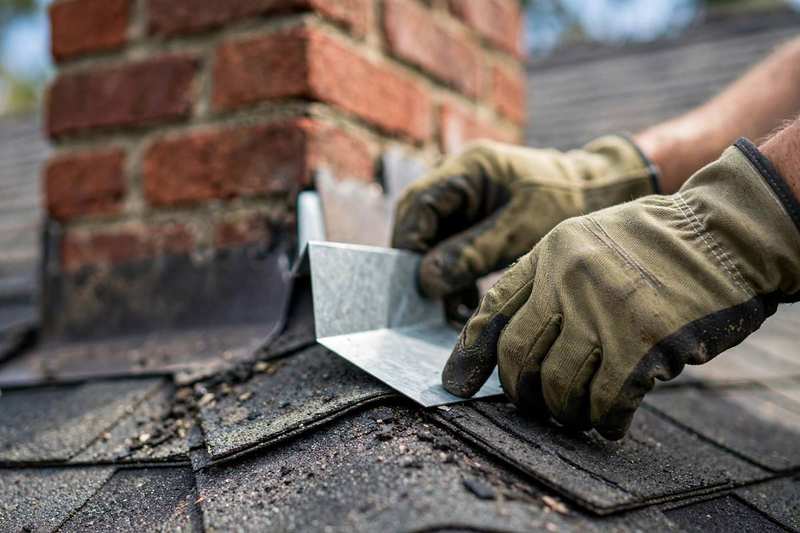
The metal where the roof meets a wall or chimney. Step flashing loosens with age, and one lifted piece lets water run straight behind the siding.
Pipe boots around vents
The rubber collar around each vent pipe. Sun and age crack the rubber, and the gap around the pipe becomes a direct path for water.
The shingle field
Lifted, missing, or nailed-too-low shingles in the open field. Wind gets under the edge and breaks the seal, or the nail sits in the exposure instead of the strip.
Valleys
The V where two roof planes meet carries the most water on the roof. Worn valley flashing or cracked valley shingles fail there first.
Skylights
The curb and flashing kit around a skylight. Condensation inside the skylight is a different problem; water stains at the corners mean the flashing has failed.
Ice damming at the eaves
Melted snow refreezes at the cold edge of the roof, and trapped water backs up under the shingles. A winter-only leak almost always starts here.
Why the wet spot is never under the hole
Water does not fall straight through a roof. It enters at a flashing gap, a cracked pipe boot, or a lifted shingle, then tracks along the decking and the rafters before it drops.
It enters at a flashing gap, a cracked pipe boot, or a lifted shingle, then tracks along the decking and the rafters, sometimes for several feet, before it finally drops onto the drywall. That is why patching the spot under the stain fails: the real opening is uphill, and it keeps feeding the same wet spot. The entry point gets confirmed, with a water test, before anything is patched.
Roof repairs we connect you with
We connect you with local roofers for each kind of leak. Every service below becomes its own detailed page; for now, each link jumps to its spot on this page.
- 01Roof leak inspectionAttic-side and exterior check that traces the stain back to the confirmed entry point.
- 02Shingle roof leak repairReplacing lifted, missing, or improperly nailed shingles in the field with matching stock.
- 03Flashing leak repairRe-seating or replacing step flashing, wall flashing, and valley flashing where water gets behind it.
- 04Chimney leak repairFixing the flashing and counter-flashing at the chimney base, the most common single leak source on older roofs.
- 05Skylight and vent leak repairReplacing cracked pipe boots and re-flashing skylight curbs so the seal lasts.
- 06Ice dam and winter leak repairStopping the active winter leak now, then addressing the insulation and ventilation behind it.
- 07Emergency and storm damage roof repairA 24/7 call line for active leaks and storm damage, with temporary protection until the repair is done.
Repair or replace?
Not every leak means a new roof, and not every old roof can be saved with a patch. The honest answer depends on the row that matches your roof. Either way, the call connects you with a local roofer who inspects first and tells you which one you have.
| Situation | Repair usually fits | Replacement is usually the honest answer |
|---|---|---|
| Age and condition | Roof is mid-life with most shingles lying flat | Shingles are curling, brittle, or losing granules across large areas |
| Number of entry points | One isolated entry point, confirmed by water test | Leaks in several places, or a new one every season |
| Patched-before areas | No prior patches, or one old patch holding fine | The same area has been patched before and opened again |
| Decking condition | Decking is solid when checked from the attic | Decking is soft, sagging, or darkened across wide sections |
| How the decision is made | Inspection confirms the leak is isolated and the surrounding roof has life left | Inspection shows the roof is failing as a system, not at one spot |
How the repair works
The repair follows one order, and the entry point is proven twice before anyone calls it done.
- Attic-side inspection
The underside of the decking is checked for water tracks, which point uphill to the entry area.
- Exterior inspection of the uphill side
Flashing, pipe boots, valleys, and the shingle field above the stain are examined for the opening.
- Water test to confirm the entry point
Water is run over one suspect area at a time, from the bottom up, until it appears inside. No guessing.
- Repair in kind
Shingle, flashing, or pipe boot is replaced to match the existing roof. Sealant is used only when it is the correct fix, never as a cover-up.
- Second water test to confirm it is dry
The same area is tested again after the repair. The job is confirmed fixed only when the test comes back dry.

Seeing a stain or an active drip?
Call now. A local roofer traces the leak to its entry point and repairs it, with a second water test to prove it is dry.
Call for Same-Day ServiceSame-day response · 24/7 emergency calls
Ice dams and winter leaks in South Jersey
An ice dam is a ridge of ice that forms at the eaves, the cold edge of the roof past the heated attic.
Heat escaping through the ceiling melts the snow higher up, the meltwater runs down, and it refreezes where the roof turns cold. As the dam grows, trapped water backs up under the shingles and into the house, which is why the leak only appears in winter. Stopping the leak now means clearing the dam and sealing the entry; fixing the cause means improving attic insulation and ventilation so the roof deck stays cold and the snow stops melting from below. Heat cable melts a channel through the dam, but it does not fix the heat loss that built it.
What to do while you wait
Safe steps that protect the house and the insurance claim. Nothing here puts you on the roof.
- Move valuables
Shift furniture, electronics, and anything irreplaceable out from under the stain and the drip path.
- Bucket the drip
Place a bucket or a wide pan under the active drip, and lay a towel around it to catch splash.
- Photograph the stain for insurance
Take dated photos of the ceiling stain, the drip, and the roof from the ground. Note the date of the storm.
- Do not climb a wet roof
Wet shingles and steep pitches are a fall risk, and foot traffic can crack the shingles further.
- Do not seal over a wet surface
Caulk and sealant do not bond to wet decking, and a smear over the stain hides the entry point from the inspection.
What roof leak repair costs in Sicklerville
There is no single price for fixing a roof leak, because the roof, the entry point, and the fix all differ. What changes the final price is listed below. You get upfront pricing and a detailed written estimate before any work starts.
| Cost factor | What it means for the price |
|---|---|
| Roof pitch and height | Steep or high roofs take more safety setup and more time on the slope. |
| Shingle type and matching stock | Architectural shingles and discontinued colors are harder to match than standard three-tab. |
| Number of entry points | Each confirmed entry point is its own repair; two leaks cost more than one. |
| Flashing work vs field repair | Chimney and valley flashing work takes more labor than replacing a few field shingles. |
| Rotted decking | Soft or rotted decking under the leak has to be cut out and replaced before the roof goes back on. |
| Emergency or tarp work | After-hours calls and temporary protection during a storm are priced separately from the repair. |
| Long-term fix vs temporary seal | A proper flashing or shingle replacement costs more than a temporary seal, and it lasts. |
Serving Sicklerville and 08081
We connect homeowners across Sicklerville, New Jersey 08081, including these communities:
- Arbor Meadows
- Arden Forest
- Avandale
- Cobblers Cove
- Eden Hollow
- High Meadows
- Kenwood
The housing stock here is mostly 1970s to 1990s homes, where the flashing and pipe boots are now at end of life, so chimney, vent, and valley leaks are the common calls in 08081.
Roof leak questions, answered
Straight answers, no jargon. Tap any question to open it.
How do I find a roof leak?
Start inside the attic and look uphill from the stain, because water travels along the decking before it drops. A pro confirms the entry point with a controlled water test on the roof, working from the bottom up until water appears inside.
Can a roof leak stop on its own?
The dripping can pause when the weather turns dry, but the opening is still there. The next storm, or the next freeze and thaw, brings the water back, usually worse. A pause is not a fix.
How much does roof leak repair cost?
It depends on the pitch and height of the roof, the shingle type, the number of entry points, and whether the fix is flashing work or a field repair. You get upfront pricing and a detailed written estimate before any work starts, so you see exactly what the price covers.
Can you repair a leak instead of replacing the roof?
Often yes. One isolated entry point with sound decking is a repair job. Widespread failure, patched-before areas that keep opening, or rotted decking point to replacement. An honest inspection tells you which one you have.
Is a tarp a real fix?
No. A tarp is temporary protection that keeps water out until the real repair happens. It buys time during a storm or while you wait for the crew, but it is not a repair and it does not last.
Why does my roof only leak in winter?
Ice dams. Melted snow refreezes at the cold eaves, the dam grows, and trapped water backs up under the shingles. The roof can be fine all summer and still leak every February until the dam problem is addressed.
Does insurance cover a roof leak?
It depends on the cause and the policy. Sudden damage from a storm is treated differently than wear on an aging roof. Photograph the stain and the roof, note the date of the storm, and check the policy wording before work starts.
How do I get a roof inspection in Sicklerville?
Call and describe what you see: where the stain is, when the dripping starts, and how old the roof is. A local roofer checks the attic side and the roof surface, confirms the entry point, and gives you a detailed written estimate.
Roof leaking in Sicklerville?
Call now and get connected with a local roofer who finds the entry point and fixes it. Same-day response, 24/7 emergency calls, upfront pricing.
Call for Same-Day ServiceA free service connecting homeowners with independent local contractors.